
How were the fire alarm devices tested?
How are smoke sensors tested? And why do they need EN 14604 FireProtect certification? FireProtect plays a role in fire protection within the Ajax system. The device can be connected to the Ajax Hub or operate independently – simply turn it on and mount it on the ceiling for 24/7 protection. The device is capable of detecting both smoke and heat increases...

How are smoke sensors tested? And why do they need EN 14604 certification?
FireProtect plays a crucial role in fire prevention within the Ajax system. The device can be connected to an Ajax Hub or operate independently – simply turn it on and mount it on the ceiling for 24/7 protection. It can detect both smoke and sudden temperature increases. Furthermore, it allows for customizable alarm types and can synchronize with other Ajax fire sensors – when one sensor detects a fire, all alarms will sound simultaneously.
The FireProtect device operates wirelessly and has its own independent power supply. Through the Ajax app on your phone, you can monitor the device's status, adjust settings, or check the smoke chamber (no more climbing ladders to the ceiling and trying to press tiny buttons like with other devices).
To enter the global fire safety market and compete with other professional solutions, FireProtect must obtain certification from an independent laboratory adhering to high technological standards. If the equipment passes all these tests, it will be certified for quality and reliability.
Read more: “ What are Grades and why must a particular protection system have them? ”
So we sent 20 FireProtect sensors to an independent laboratory. There they had to complete the testing processes in order to receive EN 14604 certification.
Whatever is on fire
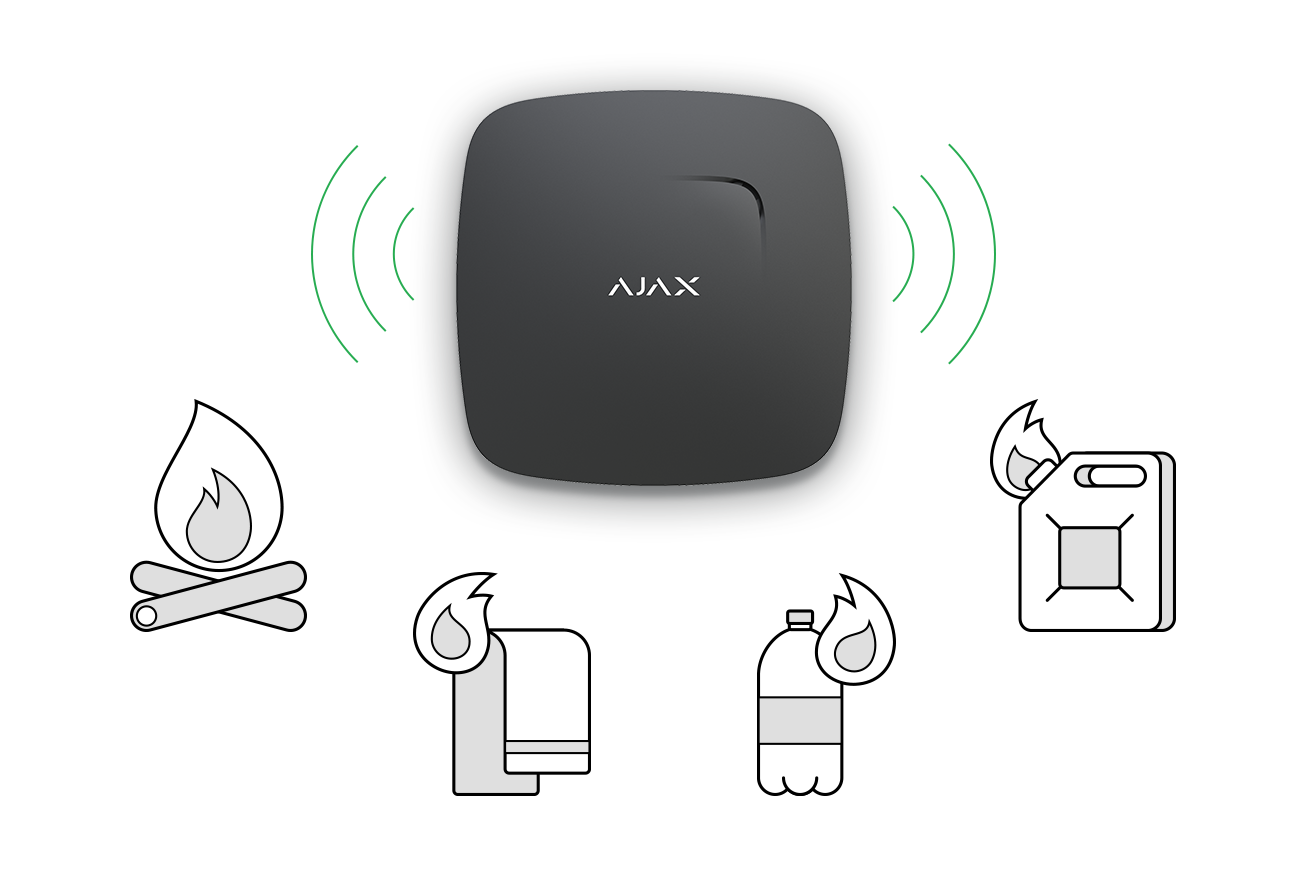
Each type of fire has different characteristics. The rate of temperature increase depends on the materials burning in the room as well as the environmental conditions. Smoke from a fire may be blown away or there may be no smoke at all. Or it may be very thin and transparent. But whatever the case, the fire alarm system still needs to give a timely alert. And you must be able to completely trust it to alert you.
The lab tested whether the sensor could detect smoke repeatedly, and whether the device's effectiveness would decrease after the initial alarm. Engineers placed the FireProtect in a smoke stream – a platform with a controllable smoke flow – and blew smoke into it six times in quick succession. And that's where things got interesting. They began changing the device's position to determine if it could detect smoke from all directions. Once they confirmed that the FireProtect met all the criteria, they moved on to a real fire.
A fire detection device must be able to react to various types of smoke under diverse physical conditions. To illustrate what Ajax did, four FireProtect devices were placed in a fire test chamber, with the following fuels ignited in sequence: wood, cotton, plastic (polyurethane), and liquid (n-heptane). Once the device could trigger all fires in a timely manner, testing continued.
Unaffected by environmental factors 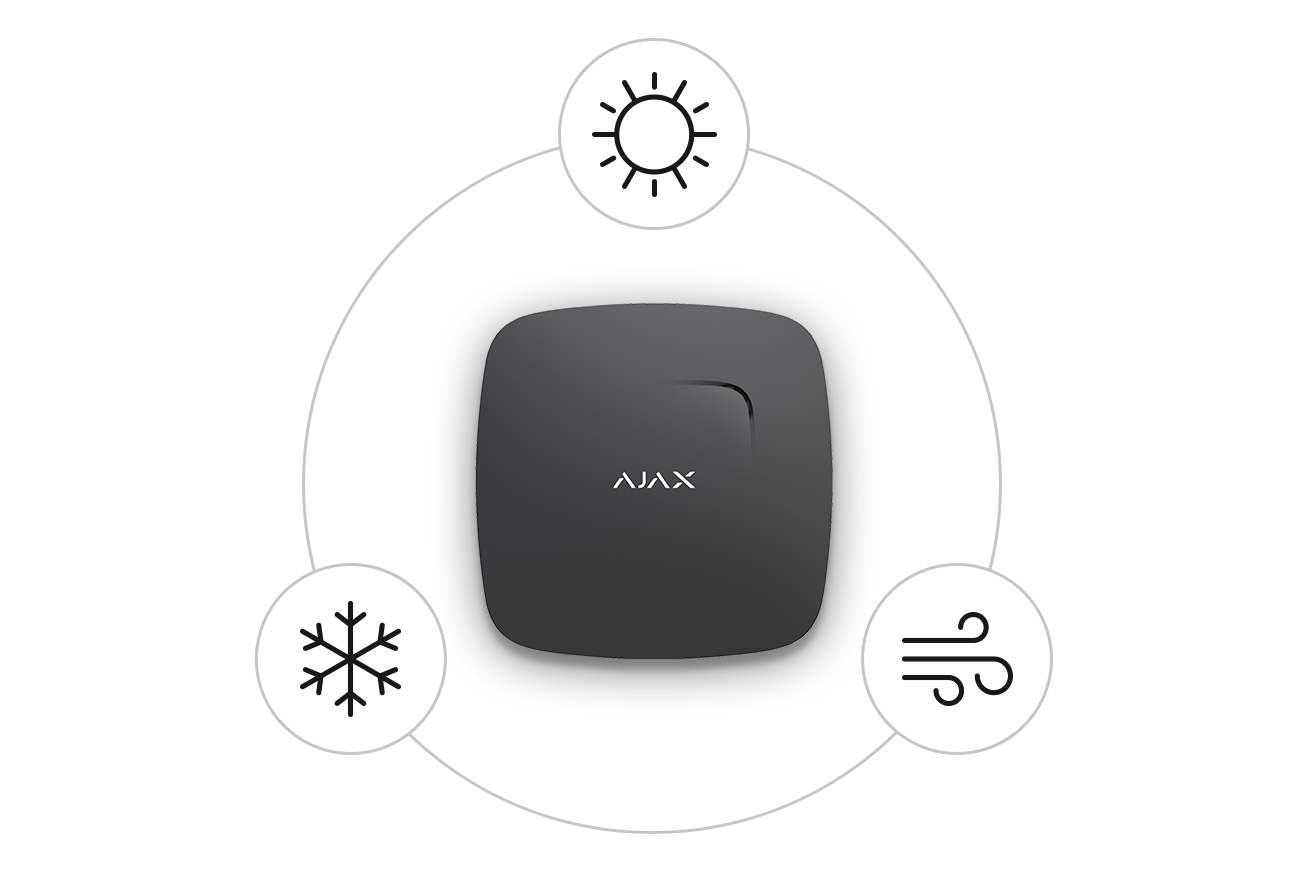
Timely fire detection is always a top priority, but it's also crucial that FireProtect doesn't generate false alarms. During year-round operation, sensors can be affected by temperature changes, such as summer heat or winter cold. The device may also be exposed to sun and wind. Therefore, the next test is its ability to effectively withstand these weather conditions.
FireProtect has demonstrated its ability to detect smoke under ideal conditions, so researchers changed the scenario: simulating a windy and weather-affected environment. They raised the room temperature to 55°C and then lowered it to 0°C. They combined temperature and humidity (40°C at 90% humidity). They shone a super-bright light on the device. The sensor was tested under negative conditions to see if there were any potential errors, whether it could still react to smoke in time, and whether its functionality would be disrupted. Once these tests were complete, the device would prove reliable against changes in environmental conditions – and false alarms would no longer be a concern.
Strong and sturdy
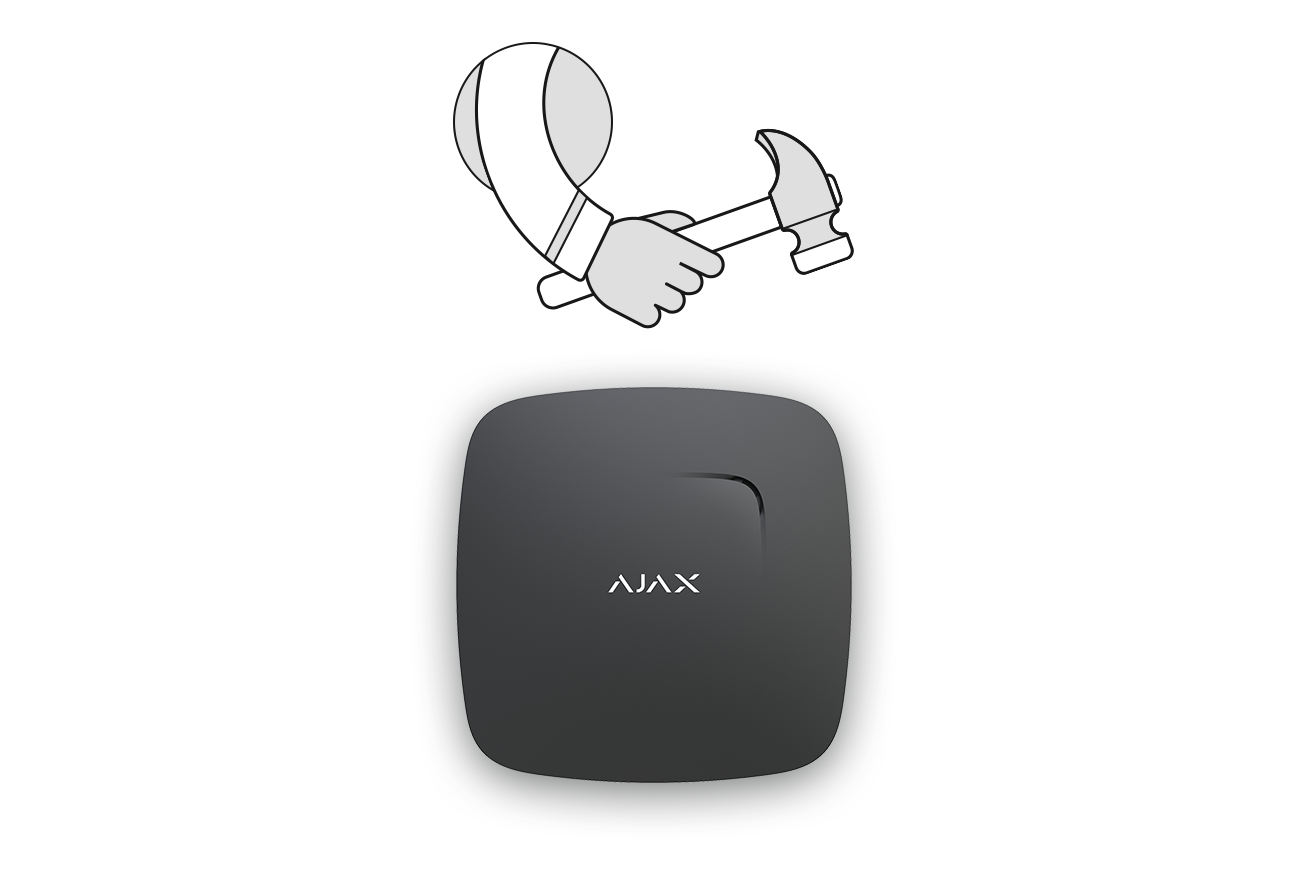
It would be pointless to rely on a fire detector that is easily damaged by a slight bump or impact. Or when it has to withstand vibrations, electromagnetic fields, or magnetic fields… as in real-world scenarios (as opposed to someone actively trying to destroy the detector at all costs).
Experts tested FireProtect's impact resistance with a hammer: a 1.9J blow directly at the device's (allegedly) weak point. And once all impact resistance tests were complete, the device was placed on a vibrating platform, subjected to static electricity, and tested in a magnetic field.
Other requirements!
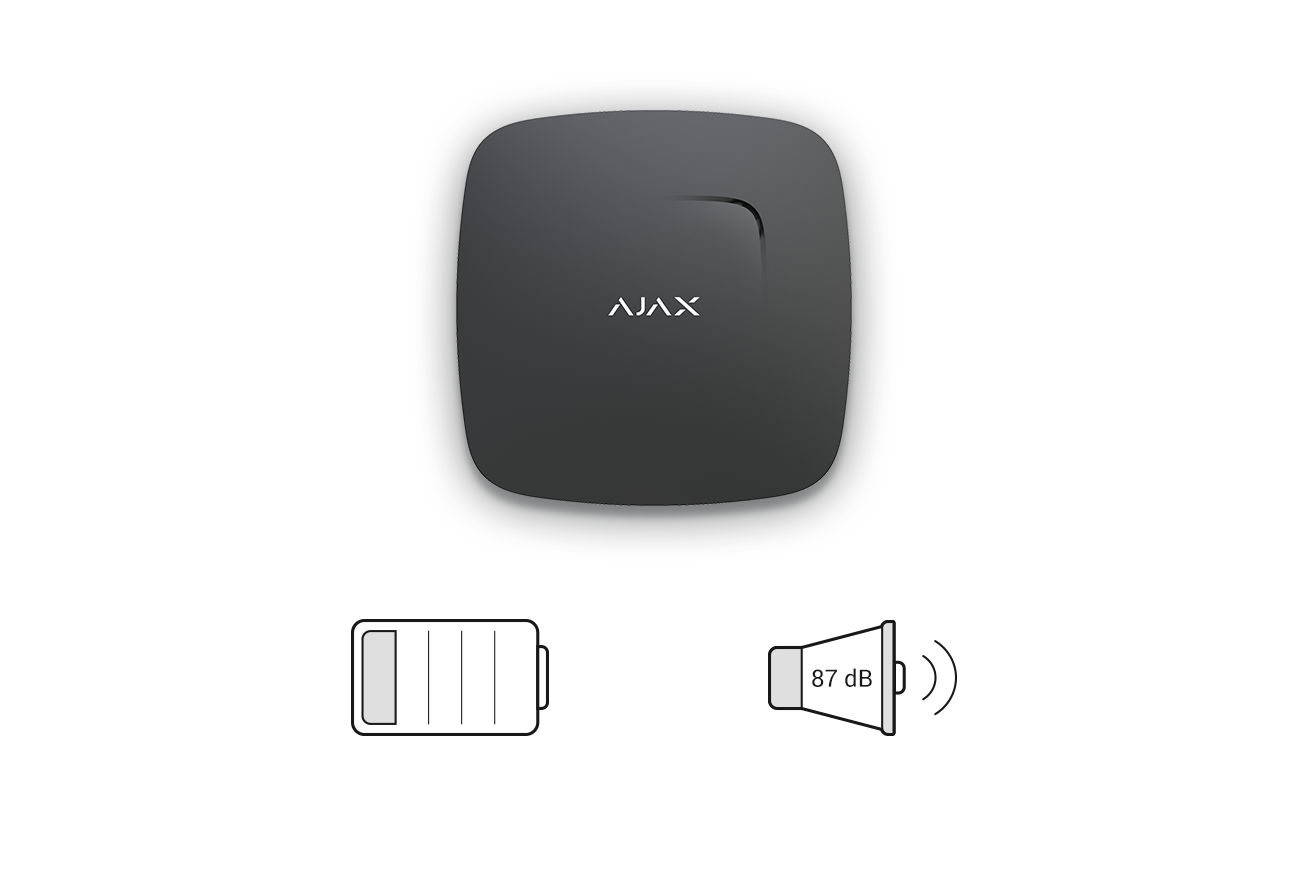
If the device is powered by a battery, it must alert the user when the battery is low and needs replacing. The EN 14604 standard requires an audible warning one month in advance when the battery is low, and the battery must have a lifespan of at least one year (Ajax's FireProtect devices can operate for up to four years without needing a battery replacement). The device must also continuously monitor the remaining battery level and alert the user if any problems occur.
If a fire occurs, everyone must be alerted: those in adjacent rooms, those who are sound asleep, or those with hearing impairments. For that reason, the alarm must not emit a sound weaker than 85 dB at a distance of 3 meters. Once the experts have measured the volume, they will check whether the alarm can operate continuously for 8 hours – alternating between 5 minutes of alarm and 5 minutes of rest. In addition to the built-in alarm siren, FireProtect can also alert users with other linked alarm sirens in the Ajax system, as well as alerts via phone, SMS, and phone notifications – these are not mandatory but Ajax believes they are necessary.
To receive certification, fire safety equipment must pass all tests – responding promptly to smoke, withstanding the testing process, and maintaining stable operation. Twenty devices had to pass these "nine levels of hell," meaning there was no room for luck. By achieving EN 14604 certification, Ajax's FireProtect has proven its capabilities and is a trustworthy choice for protecting both people and property.