
Ajax Cameras Redefine Cybersecurity in Video Surveillance
In an era where data breaches are constantly a focal point, video surveillance systems leave no room for error. As cyber threats become increasingly sophisticated, the industry is at a critical juncture. While traditional surveillance systems still rely on outdated security models, Ajax Systems is pioneering a redefinition...

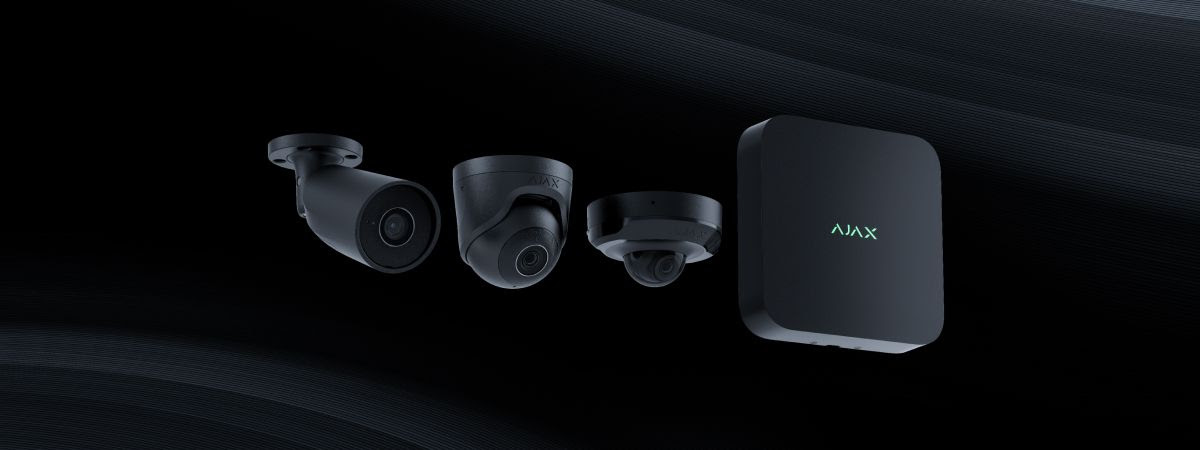
In an era where data breaches are constantly a focal point, video surveillance systems leave no room for error. As cyber threats become increasingly sophisticated, the industry is at a critical juncture. While traditional surveillance systems still rely on outdated security models, Ajax Systems is pioneering a redefinition of cybersecurity in video surveillance.
By systematically addressing the most common security vulnerabilities—from eliminating weak password protocols and implementing advanced privacy controls to protecting firmware access—Ajax is not only improving cameras but also reshaping the entire cybersecurity landscape for video surveillance. Let's explore how Ajax is making this revolution.
Cybersecurity risks in traditional video surveillance systems.
IP camera security vulnerabilities
IP cameras often have security vulnerabilities that can lead to serious incidents with widespread consequences:
- Unauthorized access to a live video stream.
- Manipulating or deleting recorded footage
- Using compromised cameras in DDoS attacks.
- Cameras are being exploited as an access point to larger systems such as enterprise IT systems, access control, alarm systems, and smart city management.
- Invasion of privacy in homes and sensitive areas (e.g., healthcare facilities)
- Industrial espionage through office and production facility surveillance.
- The risk of being blackmailed or threatened with leaked footage.
One of the most serious vulnerabilities of IP cameras is the use of default passwords. Many cameras are shipped with default login credentials that users often overlook changing, leaving the device vulnerable to unauthorized access. Furthermore, the inclusion of "backdoors" by some manufacturers for maintenance purposes further increases the risk. In recent years, several major incidents related to this vulnerability have occurred.
Challenges in security protection
One of the biggest challenges for IP camera security is the need for frequent firmware updates. Many cameras operate on outdated software, making them vulnerable to known exploits. The main reasons include:
- The manufacturer rarely releases updates.
- The complicated update process discourages users from performing it.
- Many camera models do not have an automatic update feature.
- Users are not yet fully aware of the importance of regular updates.
Besides outdated software, traditional systems lack end-to-end encryption and struggle with encryption key management. Integrating new cameras with older, less secure systems also increases risk. Furthermore, weak or non-existent multi-factor authentication (MFA) methods, along with ineffective access control, leave surveillance systems vulnerable to intrusion.
Ajax's comprehensive approach to video surveillance security.
Ajax Systems has developed a robust video surveillance security strategy that addresses the vulnerabilities and challenges mentioned above. The company integrates hardware and software solutions to protect against both cyber and physical threats.

Hardware security
Each Ajax camera has an integrated accelerometer sensor, which plays a crucial role in preventing physical tampering. This sensor can detect attempts to change the camera's angle or remove the device from its installation location. Upon detecting any interference, the system will immediately alert the user and the security company.
Ajax cameras adhere to the strictest security standards. System data is securely stored within the European Union, strictly complying with European Data Protection Regulation (GDPR). In particular, Ajax video products are fully NDAA compliant, meaning they do not contain components from sanctioned manufacturers.
In addition, Ajax cameras are highly durable with an IP65 rating, providing optimal protection against harsh environmental conditions.
Software security features
Ajax's software security features form a solid foundation, enhancing the protection of the entire video surveillance system. These include passwordless authentication, over-the-air (OTA) updates, proprietary video streaming technology, and robust privacy controls. This multi-layered security approach is applied to all Ajax devices, from cameras to Network Video Recorders (NVRs), and works seamlessly with integrated third-party cameras.
Passwordless authentication
Ajax cameras and NVRs incorporate advanced software features that significantly enhance overall security. One key feature is passwordless authentication using Two-Way Transport Layer Security (mTLS). This method ensures that only authorized devices can connect to the cameras, minimizing the risk of unauthorized access.
The mTLS system requires both parties – the client device (such as an NVR or camera) and the server (cloud infrastructure) – to present valid credentials before establishing a connection. This two-way authentication process verifies the identity of both parties, creating a secure and encrypted communication channel. Video data is then transmitted via TLS encryption to ensure absolute security.
When a camera records to an NVR, an additional layer of authentication is added. The cloud system determines which devices are allowed to connect to the camera. During the connection process between the NVR and the camera, both the certificate and the device ID are verified. The NVR also checks if the camera has a valid certificate with the correct ID, ensuring that no devices are being replaced or tampered with.
By implementing this robust security protocol, the system has completely eliminated a group of common security risks, including password guessing attacks and exploitation of default credentials.
Over-the-Air (OTA) updates and remote management
Ajax has implemented an over-the-air (OTA) update system for its devices, recognizing that outdated software is a serious security risk. This approach ensures that all active devices are running the latest firmware version, with ongoing security patches and feature enhancements. This mechanism also ensures that only valid, verified software can be installed on the cameras, preventing attackers from injecting malware through fake updates.

The Ajax system provides comprehensive remote management capabilities, significantly simplifying system maintenance and operation. Through Ajax's mobile and desktop applications, professionals can control camera functions, manage access, and perform system diagnostics from anywhere. This feature minimizes the need for on-site technicians, as many adjustments, checks, and even troubleshooting can be performed remotely.
Proprietary video transmission technology
Ajax Systems has developed JetSparrow, a proprietary video transmission technology, to optimize transmission performance. JetSparrow ensures high transmission quality even under limited bandwidth conditions.
One of the key elements in JetSparrow's security is the use of data encryption during transmission. To better understand the Ajax approach, it's necessary to consider the main types of encryption used in network communication:
- Symmetric encryption: Uses a single key for both encryption and decryption. This method is fast but requires a secure key exchange channel.
- Asymmetric encryption: Uses a pair of public and private keys. This method is more secure when exchanging keys but slower when processing large amounts of data.
- TLS (Transport Layer Security): A security protocol that uses a combination of both symmetric and asymmetric encryption to create a secure communication channel.

Ajax uses TLS encryption for data transmission, ensuring comprehensive end-to-end protection for video streams as well as all communication between Ajax devices and cloud infrastructure. While mTLS ensures device authentication, TLS focuses on protecting data as it travels between cameras and surveillance devices, preventing unauthorized access. TLS offers significant security benefits, including data security, integrity, and information authentication.

Ajax and Traditional IP Camera Systems
| James Cameras | Traditional IP camera system |
| Authentication | Using mTLS eliminates the risks associated with weak or default passwords. |
| Network security | Only authorized devices can communicate within the network. |
| Infrastructure | Utilize cloud infrastructure |
| Security update | Centralized security measures are continuously updated. |
| Threat monitoring | Real-time monitoring, rapid threat detection, and immediate response. |
| Seamless integration | Instant synchronization with the alarm system. |
| Data storage | Cloud storage helps protect data from the risk of loss due to theft or physical damage. |
Network security methods for video surveillance systems.
Using a synchronized surveillance system from a single manufacturer offers numerous benefits. A system designed by a single vendor ensures that all components—from cameras, NVRs, sensors to the control center—are fully compatible and optimized to work seamlessly together. This integration minimizes security risks that can arise from using hardware or software from multiple manufacturers, where vulnerabilities may exist due to differences in communication protocols or security standards. Additionally, a single-manufacturer system simplifies the update and maintenance process, allowing for easy installation of software updates and security patches on all devices.
Furthermore, professional installation plays a crucial role in the effectiveness and security of a surveillance system. Certified technicians are skilled in placing cameras and sensors in optimal locations, minimizing the risk of physical tampering or vandalism. They are also trained to configure the equipment correctly, maximizing the system's security features.
Although Ajax's built-in security features have provided high reliability, there are still some important principles that help enhance the security of any IP camera and video surveillance system:
- Change the default password: Always change the default password to a strong and unique one to avoid the risk of being hacked.
- Regular firmware updates: Use the latest firmware version and install security patches as soon as they are available. Updating the software of your cameras, routers, or other IoT devices should be considered part of a network security routine.
- Enable automatic updates: If your IoT device vendor allows automatic updates, make sure this feature is enabled on your device.
- Use a secure network: Avoid directly connecting cameras or IoT devices to the internet. If a connection is unavoidable, limit the amount of personal information (such as name or address) and use a private, secure network to prevent unauthorized access.
- Data encryption and secure connection activation: Ensure all video data transmitted between the camera and server is encrypted, protecting data integrity during sending, receiving, or recording.
- Monitoring for unusual activity: If supported, enable alerts when detecting unusual logins or unauthorized settings changes, helping to detect and address security issues promptly.
- Regular access checks: Implement role-based access control (RBAC) to ensure that each user only has access appropriate to their authorized function, helping to prevent unauthorized actions.
As cyber threats become increasingly sophisticated and widespread, the consequences of a cyberattack can be severe, ranging from privacy breaches to financial and reputational damage. Therefore, a comprehensive security strategy is not only an advantage but also a necessity.
Ajax's approach is to continuously improve its deployed equipment. Even cameras already installed will receive free feature and security updates over time. This ensures Ajax users are always protected with the latest technology without needing to replace their hardware. Furthermore, Ajax Systems is constantly expanding its product line, introducing new devices and solutions to address ever-increasing security challenges.